Hand eczema
Hand eczema (also known as ‘dermatitis’) is one of the most common types of eczema. It mainly affects the palms but can affect other parts of the hand, too.
The skin forms part of the immune system and helps to protect against infection. It not only provides a physical barrier, but the layers of skin contain specialised cells that destroy invading foreign proteins (antigens) such as bacteria and viruses. In people with eczema, the immune system overreacts in the skin, making it inflamed and itchy.
Symptoms
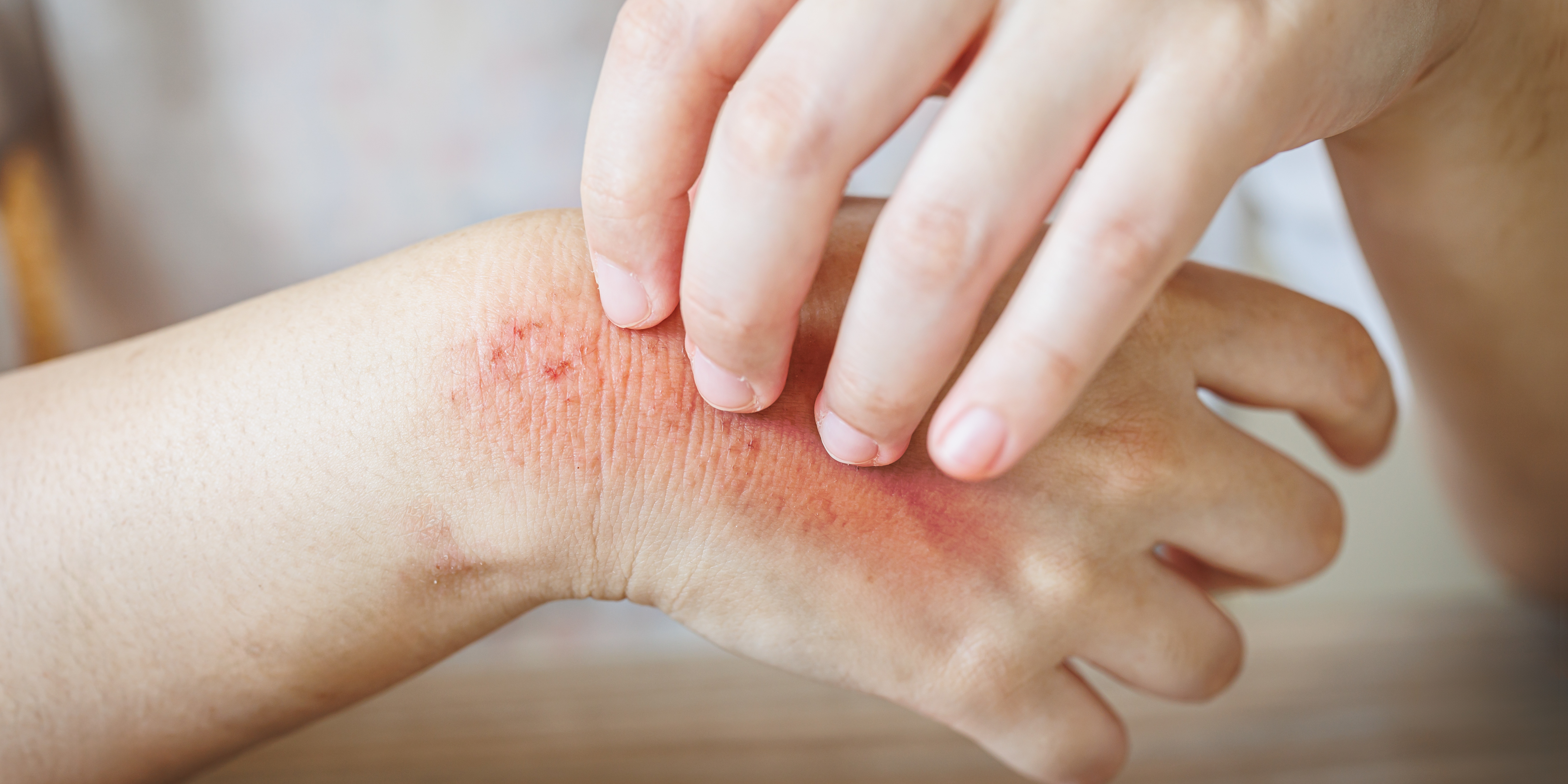
The main symptoms are dry, itchy skin that is red or darker than the surrounding skin
Other symptoms include; cracking, soreness and bleeding
In some cases, blisters may develop. The skin is generally dry, scaly and thickened, and the fingers can become swollen when the eczema is flaring
If the eczema is severe over a long time, the hands can become very painful, making it difficult to carry out day-to-day tasks such as doing up buttons, holding a pen or using a computer.
Common types of hand eczema
Contact dermatitis
Coming into contact with irritants such as dust, detergents, cleaning agents, airborne sprays, chemicals used in acrylic nails, or even frequent hand- washing or wet wipe use can cause irritant hand eczema (irritant contact dermatitis of the hands). The skin on the palms of the hands is much thicker than elsewhere on the body (apart from the soles of the feet) and is normally able to withstand a great deal of wear and tear. But when people regularly immerse their hands in detergents or solvents, the protective barrier of the skin breaks down, and eczema may develop. People who have irritant contact dermatitis often have a history of eczema in childhood.
Allergic hand eczema (allergic contact dermatitis of the hands) arises as a result of an allergic reaction to a particular substance in the environment. It is possible to be allergic to a number of different substances, but common causes of contact sensitivity include nickel, fragrance ingredients, preservative chemicals, rubber and various plants. Once a person’s immune system has identified a substance as ‘harmful’, they will react to the substance every time their skin is exposed to it, and this reaction becomes more severe on every exposure to the allergen.
Pompholyx eczema
Pompholyx eczema (also known as ‘dyshidrotic eczema’) is another type of eczema that affects the hands (and feet). Pompholyx eczema involves the development of intensely itchy, watery blisters, mostly affecting the sides of the fingers, the palms of the hands and soles of the feet. Some people have pompholyx eczema on their hands and/or feet with other types of eczema elsewhere on the body.
This condition can occur at any age but is most common before the age of 40. The onset of pompholyx eczema can be very sudden and the cause is unknown. It is thought that stress, sensitivity to metal compounds (such as nickel, cobalt or chromate), heat and sweating can aggravate this condition. The skin is initially very itchy, and, if you scratch, the blisters can burst, causing soreness and weeping. The skin will then dry out and often peel. Pompholyx can occur as a single episode, but for most people, it is a chronic type of eczema that will come and go with a flare lasting 2-3 weeks.
Treatments
Emollients are medical moisturisers that come in different formulations. There are lotions, creams, gels, ointments and a spray.
Toctino is an oral treatment licensed for use in adults with severe chronic hand eczema that has not responded to treatment with potent topical steroids.
Phototherapy (UVB or PUVA), using either UVB or UVA rays administered by a special foot/hand light box, may be recommended if this treatment option is available locally to you. Assessment and treatment (2-3 times a week) would usually take place in a dermatology department.
When an allergic dermatitis is suspected, your GP should refer you to a dermatologist, who will normally carry out patch testing to try to identify the allergic cause.
This is sometimes prescribed for treating hand eczema. TCIs have been developed for treating atopic eczema and work by altering the immune system.
Triggers
A common cause of hand eczema is an allergy to nail varnish or varnish remover. The eyelid skin becomes sensitised when you touch or rub the eyes with painted nails. The condition usually clears rapidly when you stop using nail varnish.
Do not peel citrus fruit, onions, chillies or garlic with bare hands. Many fruits and vegetables are irritants. If you do handle them with bare hands, wash your hands as soon as possible afterwards and apply an emollient.
Detergents or solvents coming into contact with the hands can damage and irritate the skin
Wearing rings (especially those made from inexpensive metals that may contain nickel) may worsen hand eczema. Never do housework or wash your hands with soap while wearing a ring. This is because soap and cleaning detergents can collect under the ring and cause irritation.
The condition tends to worsen when an individual is run down or under prolonged psychological stress. Sensitivity to metal compounds - such as nickel, cobalt or chromate
Environmental factors such as sun, temperature and humidity may trigger flares. Some people find that their skin improves in the summer, while others find that hot weather makes them itch and scratch more.