
Emollients
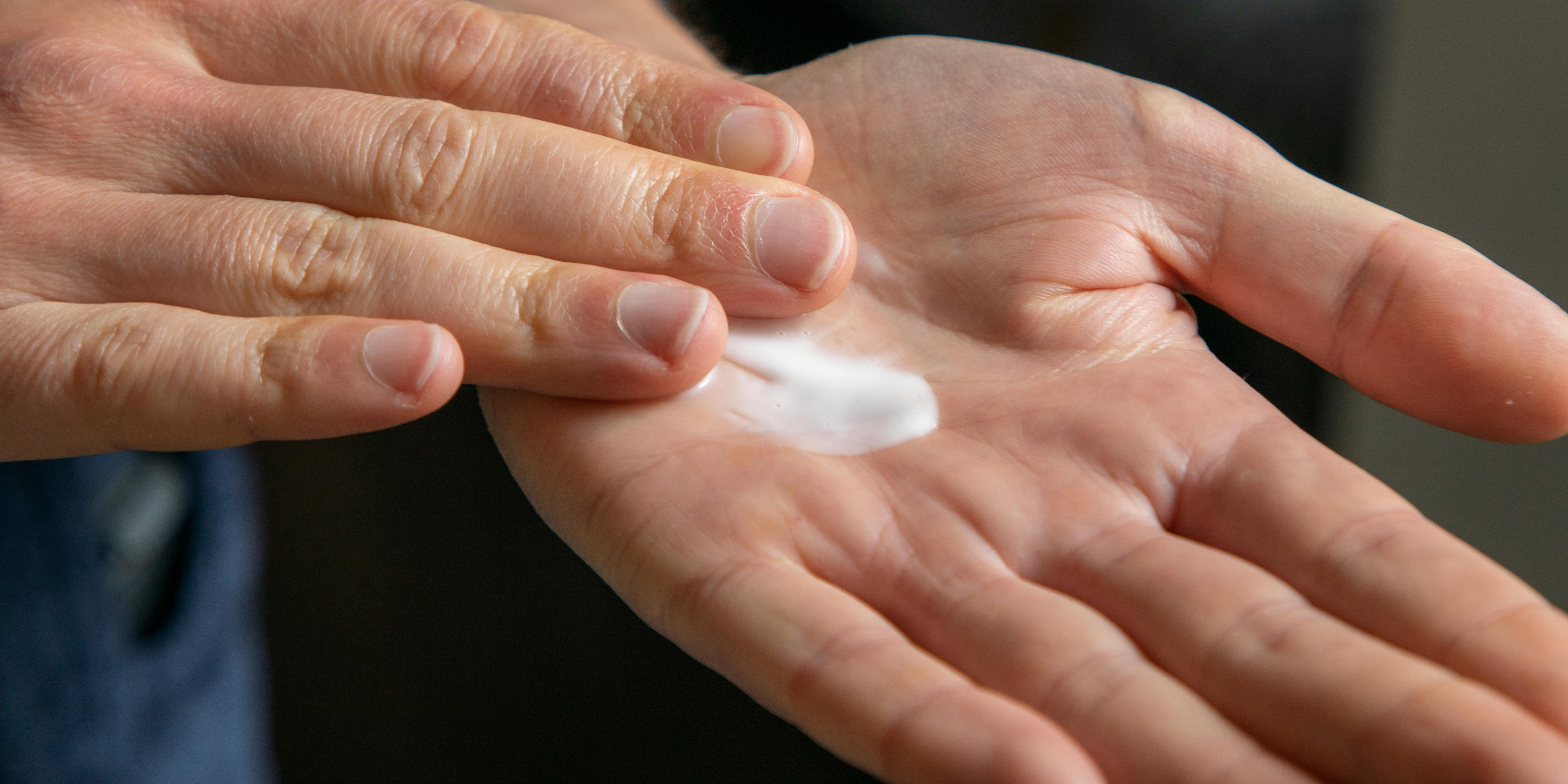
Emollients are medical moisturisers used to treat eczema and other dry skin conditions. Unlike cosmetic moisturisers, they are unperfumed and do not have ‘anti-ageing’ additives.
Emollients have been used for over 5,000 years and form an essential part of the therapy for all dry skin conditions. Emollients are safe and effective – a good skin care routine using emollients can soothe, moisturise and protect the skin, helping to reduce the number of eczema flares.
How do emollients work?
Dry skin is one of the main symptoms of eczema. This defective skin barrier allows irritants, allergens and bacteria to enter it more easily. Itchiness leads to scratching which causes skin damage and also allows irritants, allergens and bacteria to enter the skin.
Emollients soothe and relieve itch, producing an oily layer on the surface of the skin, which traps water beneath it. The restoration of the skin’s barrier function by emollients prevents irritants, allergens and bacteria entering the skin, thereby avoiding or reducing eczema flares and infection.
How do I choose the right emollient for me?
There are over 120 emollient products that are approved for use by the NHS. However, healthcare professionals are usually only allowed to prescribe a few different brands, and the range available will depend on where you live. Healthcare professionals may sometimes provide samples of emollients for people to try. These emollients can also be purchased in pharmacies and some shops, although they may need to be ordered specially.
It can be difficult to find the right emollient – one that works well and that you like. You may prefer to use a cream or gel during the day and during the spring and summer months, and a greasier emollient just before bed and during the autumn and winter. You may also need to use different types of emollient on different parts of the body.
It’s therefore helpful to understand the different emollient formulations and how they work, and consider these in the context of your skin and lifestyle needs.
Emollient formulations
How should I apply emollients?
Always test new products on a small area of unaffected skin for 48 hours in case you have a reaction.
Use your emollient of choice frequently. This should be at least twice a day, and every few hours when the eczema is flaring or the skin is very dry. It’s recommended that an adult uses at least 500g per week when the eczema is affecting a large area of the body (at least 250g for a child).
Every time you wash or take a bath/shower with your leave-on emollient, pat your skin dry afterwards with a soft towel and immediately re-apply your leave-on emollient (unless you’re also using a topical steroid – see advice below).
Apply emollient gently in the direction of hair growth. Never rub up and down, as this could trigger itchiness, block hair follicles and create more heat in the skin. It’s a good idea to dot blobs of emollient around your limbs and trunk first (you may need someone to help you with your back), as this helps ensure that all areas of skin are moisturised.
Apply emollient to all of your skin, not just the area/s with eczema.
Continue to use emollient even when your eczema has improved. This will help prevent flare-ups.
Remember to use a spoon to decant emollient from any tubs you may be using. If you dip your fingers into a tub, it can easily become contaminated with bacteria. A metal dessert spoon is good for decanting emollient and washes well under the tap. If you’re using pump handle dispensers for your emollients, you don’t need to decant – you can just pump the emollient onto your hand (avoid touching the nozzle).
You can store your emollient at room temperature, or in the airing cupboard if you like it warm (but do not put your emollient on a hot radiator as this will encourage the growth of bacteria). Coldness helps soothe itch, so you may prefer to store emollient cream in the fridge (but do not freeze, and do not put emollient ointments in the fridge).
Carry a small container of emollient with you whenever you are out and about, to use as needed.
Protect your hands with emollient (and perhaps wear gloves) before handling substances such as sand, certain foods, paint and clay, so they don’t irritate your skin.
For information on using emollients before and after swimming, see our Eczema and swimming factsheet.
You should continue to use emollients alongside other treatments prescribed.
Steroid creams and ointments (topical steroids): Recent research has shown that applying an emollient before a topical steroid can reduce the amount of topical steroid that reaches the skin, so it’s best to apply the topical steroid first (you may choose to do this after a bath/shower). Leave 30 minutes if you can between applying the topical steroid and the emollient. The reason for the 30-minute gap is to avoid diluting the topical steroid with the emollient and spreading it to areas that don’t need it.
For topical calcineurin inhibitors, the guidance is different. The manufacturer recommends that emollients should not be used within 2 hours of applying tacrolimus (Protopic). In practice, this means using leave-on emollients and/or soap substitutes, and then leaving a 2-hour gap before applying tacrolimus. With pimecrolimus (Elidel), no gap is needed
Caution: Emollients aren’t flammable on their own or on skin, but dried residue on bedding, clothing, or dressings can ignite more quickly. The risk is highest for smokers or anyone using naked flames or heat sources like halogen heaters or incense. Take extra care, keep flames away from clothing and bedding, and wash them regularly to reduce residue build-up.
FAQ's
Useful resources
Publications
Government safety advice
“SLS is used as a skin irritant in patch testing, and is therefore an ingredient that should never be included in an emollient formulation” - Use of emollients in dry-skin conditions: consensus statement