
Help & Support
Find out about the different types of eczema, treatments and triggers, and download our booklets and factsheets.
.png)
What is eczema?
Eczema affects at least 1 in 5 children and 1 in 10 adults. Learn more about this common skin condition.
Support for...
Eczema usually starts during the first six months of a life. Visit this page for information and advice on how to manage your babies' eczema.
Eczema affects 1 in 5 children in the UK. Visit this page for information and advice on how to support your child with eczema.
The teen years can be challenging for young people. Alongside hormonal changes, eczema can effect their sleep, relationships and mood. Visit this page to find out how to best manage your eczema or support your teenager.
Eczema affects 1 in 10 adults in the UK. Visit this page for information and advice on how to manage your eczema.
Explore Eczema
Find out about different types of eczema and common triggers.
Learn about the various different types of eczema.
Explore types of eczema by the areas of the body they affect.
Explore what can trigger your eczema so you’re aware of what to expect next time.
Additional support
.png)
Find out more about the different types of treatments for eczema, from emollients to topical steroids.

Learn about the mental health challenges associated with eczema and find support and coping strategies to manage the emotional impact.

Living with eczema can look different for everyone. From managing flare-ups to finding routines that support your skin, daily life with eczema often involves learning what works best for you.
Eczema in later life
Eczema can also suddenly appear for the first time in later life, for reasons that can be difficult to determine. Skin becomes drier as we get older, which can lead to roughness, scaling and itchiness.

Downloadable Booklets
We have created variety of downloadable booklets to support you in managing eczema. All content is evidence-based, grounded in the latest research and regularly reviewed by doctors and nurses.
Advice for parents and primary school staff around supporting children with eczema at school.
Supportive, practical information for adults managing eczema, based on the latest research and regularly reviewed by doctors and nurses.
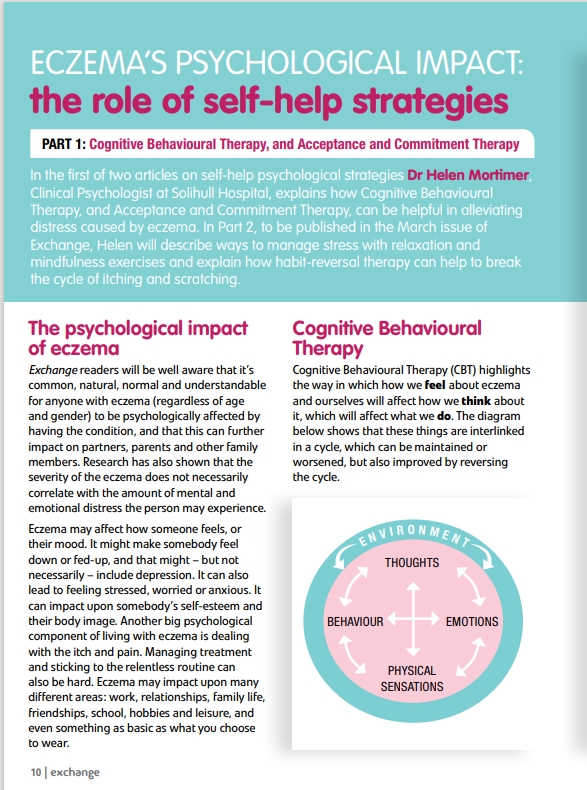
Dr Helen Mortimer, Clinical Psychologist at Solihull Hospital, explains how Cognitive Behavioural Therapy, and Acceptance and Commitment Therapy, can be helpful in alleviating distress caused by eczema
Dr Helen Mortimer, Clinical Psychologist at Solihull Hospital, explains how relaxation and mindfulness exercises can help to relieve stress associated with eczema and how techniques such as habit reversal can help to break the itch–scratch cycle.
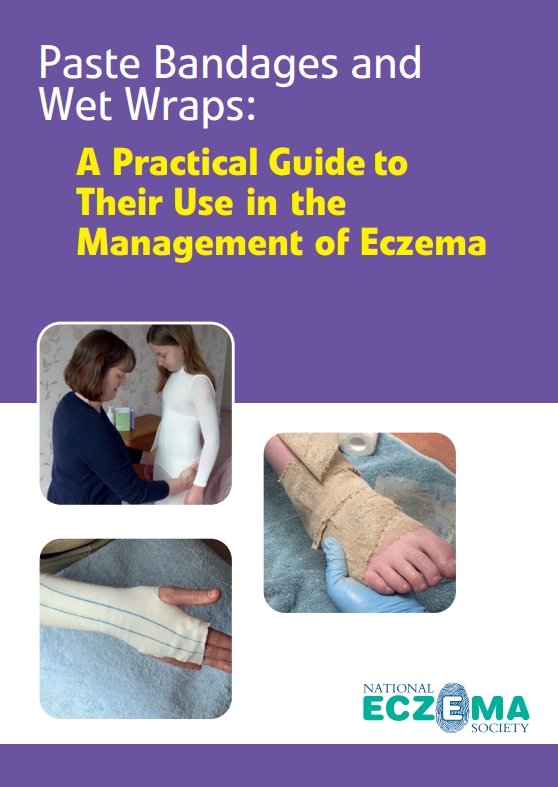
This booklet explains how paste bandages and wet wraps may be useful additions in eczema management for you or your child.

Read this guide for more information about managing eczema as a teenager.