Pompholyx (dyshidrotic) eczema
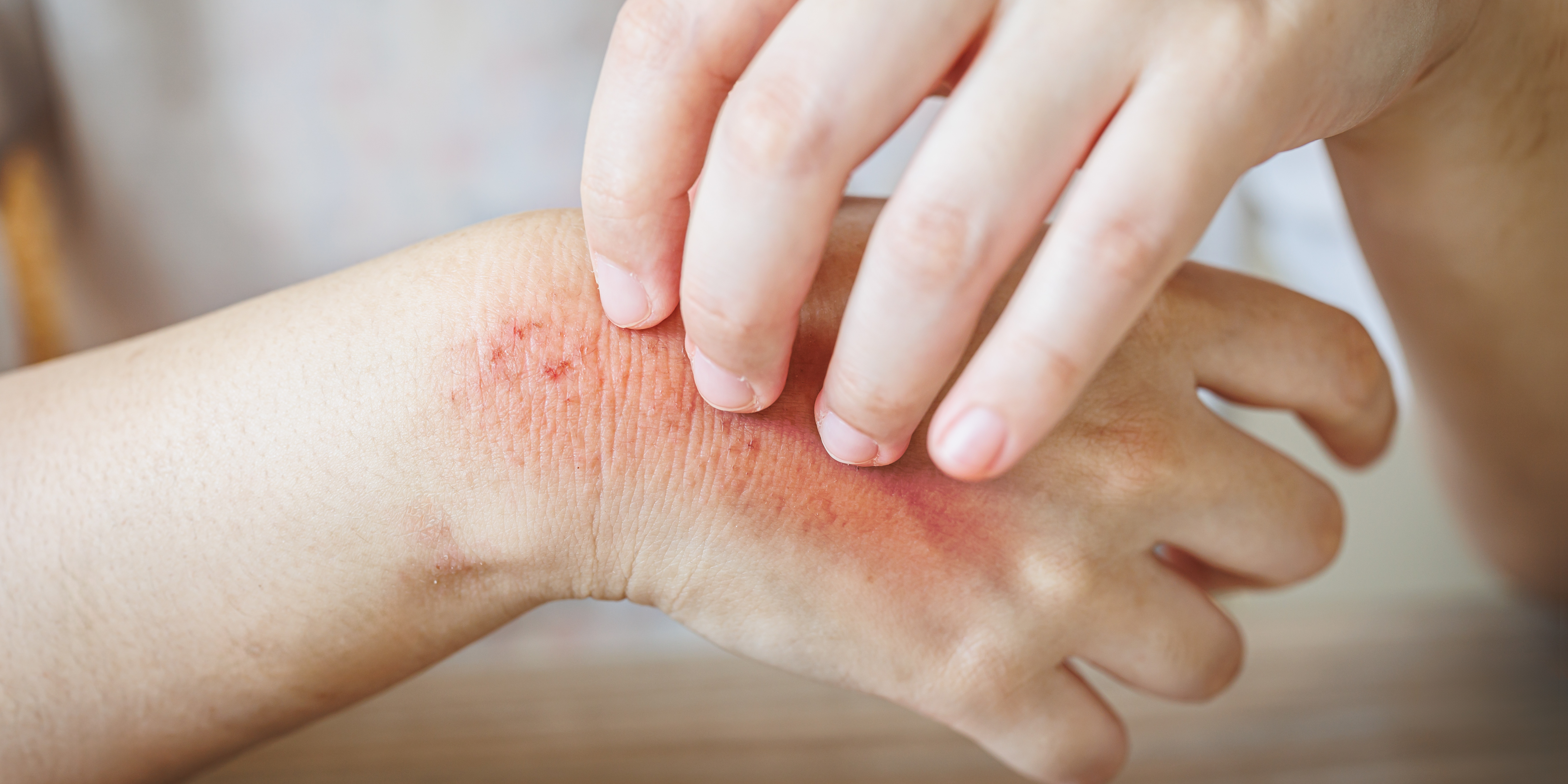
Pompholyx eczema (also known as ‘dyshidrotic eczema’) is a type of eczema that affects the hands and feet. This condition can occur at any age but is usually seen in adults under 40, and is more common in women. Fifty percent (50%) of people with pompholyx have atopic eczema as well, or a family history of atopic eczema.
Symptoms
Intensely itchy, watery blisters, affecting the sides of the fingers, the palms of the hands and soles of the feet.
Some people have pompholyx eczema on their hands and/or feet with other types of eczema elsewhere on the body.
The skin is initially very itchy with a burning or prickling sensation.
Then comes a sudden crop of small blisters (vesicles), which turn into bigger, weepy blisters, which can become infected.
When the skin is infected, there is inflammation, irritation/pain, swelling and pustules.
Peeling can occur when the skin dries out
People of any skin colour can experience skin that is red or darker than the surrounding skin along with dry with painful cracks
Pompholyx eczema can also affect the nail folds and skin around the nails, causing swelling (paronychia).
Pompholyx eczema can coexist with fungal infections, so assessment should include checking for the presence of any fungal infection on the hands and/or feet.
Triggers
The exact cause of pompholyx eczema is not known. However, it’s thought that the following can aggravate this condition:
Stress - Worry can make the condition worse, or more long-lasting. Any sources of concern should be addressed, if possible.
Metal - Sensitivity to metal compounds (such as nickel, cobalt or chromate)
Overheating - Heat and sweating can aggravate this condition.
Hot or cold water - Use lukewarm water for washing as very hot or cold water may irritate the skin. Remember to use an emollient as a soap substitute.
Detergents- Try to avoid direct contact with these by wearing 100% cotton gloves under rubber or plastic gloves when carrying out household tasks. When shampooing your hair, wear cotton gloves under waterproof gloves, as above. If possible, when the pompholyx is active, ask someone else to do the shampooing for you – and the housework, too!
Common treatments
The following treatments are recommended to treat Pompholyx (dyshidrotic) eczema.
Emollients - These are a first-line treatment and should be used for moisturising and washing.
Topical steroids - Pompholyx eczema needs to be treated with topical steroids to reduce inflammation and heal cracks.
Treatments for severe eczema
For cases of more severe eczema that do not respond to first-line treatments, the following options are recommended:
Immunosuppressants - Alitretinoin (known as Toctino) is an oral treatment for adults with severe eczema who have not responded to potent topical steroids.
Oral steroids - Occasionally, for very severe outbreaks of pompholyx eczema, a short course of oral steroid tablets is prescribed.
Phototherapy (UVB or PUVA) - Phototherapy using either UVB or UVA rays administered by a special foot/hand light box, may be recommended if this treatment option is available locally to you.
Potassium permanganate soak - If your skin is weeping, oozing and crusting, a potassium permanganate soak may be advised. See our FAQ's below for more guidance on how this is applied.