
Topical steroids
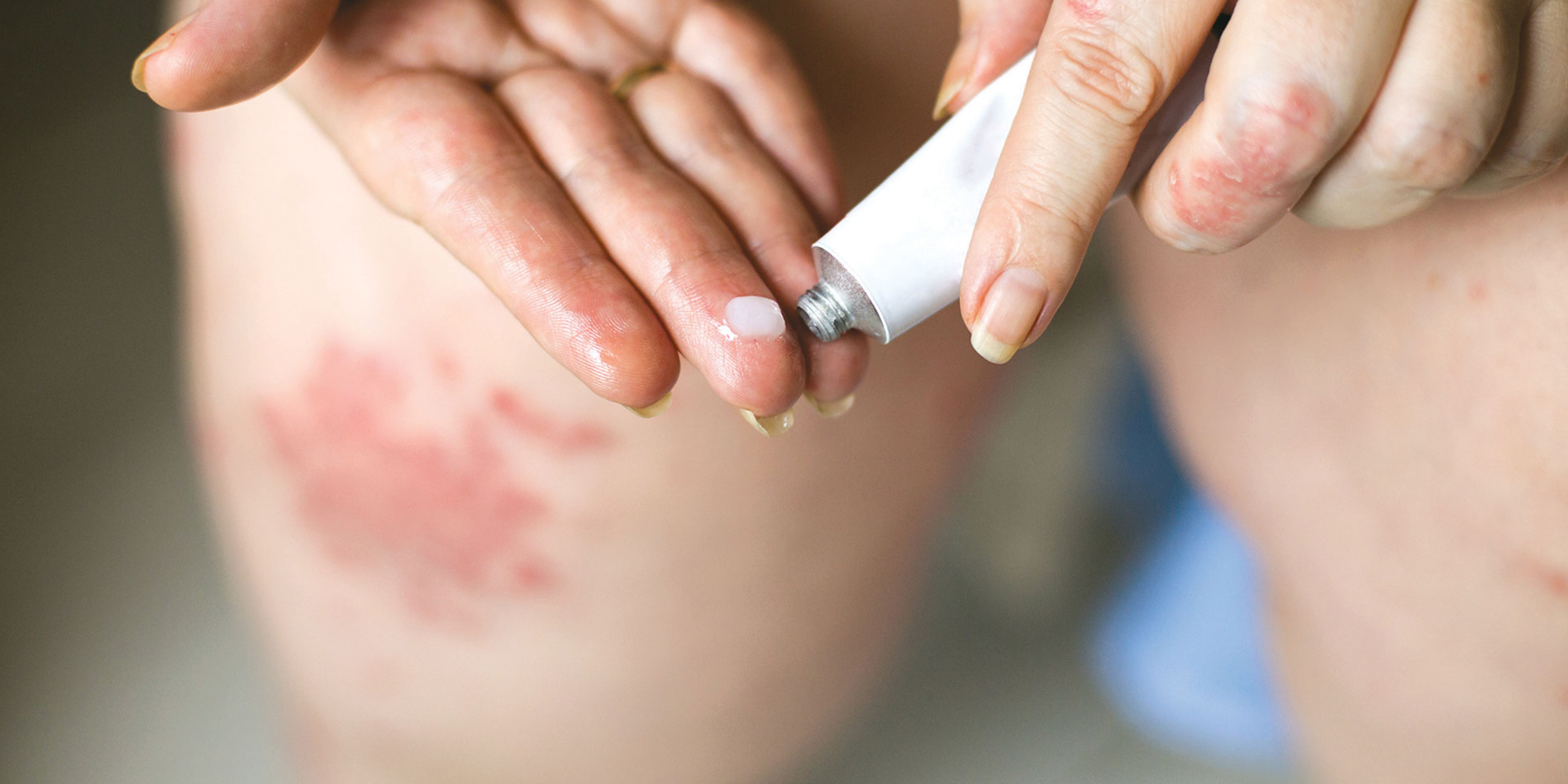
Topical steroids (topical corticosteroids) are recommended by the NHS for treating eczema flareups and have been used for over 70 years. To work effectively, they need to be used alongside emollients, which soothe, protect and moisturise the skin. For some people with eczema, daily use of emollients for moisturising and washing is all that is needed to keep their condition under control. However, for most people with eczema, topical steroids will need to be used for short treatment bursts, at the correct strength for the person’s age, eczema severity and affected body area, to bring a flare-up under control.
What are topical steroids?
‘Topical’ means applied directly to the skin. ‘Steroids’ are a group of natural hormones, produced in the body by a variety of different glands. They are also produced synthetically as medicines and given as injections and tablets, as well as creams and ointments. Topical steroids act on the skin to reduce inflammation and speed up healing. They also help to make the skin less hot, itchy and sore. They are not, however, a cure for eczema.
Topical steroid preparations are available as creams, ointments, lotions, foams, gels, mousses, shampoos and tape, and come in different strengths or potencies. Which topical steroid/s you are prescribed will depend on your age, the severity of your eczema, the part of your body that is affected and any other treatments you are using.
When your eczema is very dry, it is likely that your healthcare professional will prescribe an ointment-based preparation. Creams, which are light and cooling, may be used to treat moist, weepy or ‘wet’ eczema. Lotions are easiest to apply on hairy areas of the body.
There are two types of topical steroid that can be bought over the counter from a pharmacy without a prescription: 1% hydrocortisone cream, a mild topical steroid, and Eumovate (clobetasone butyrate 0.05%), a moderate topical steroid (see Table 1 in our Topical steroids factsheet at the bottom of the page).
When topical steroids are obtained without a prescription, they should NOT be used around the eyes or on the face, on broken or infected skin, on the anal or genital areas, in pregnancy, or by anyone under the age of 10 years (hydrocortisone) and 12 years (Eumovate). Usage of this kind requires the guidance of a healthcare professional. Hydrocortisone and Eumovate can only be bought in small tubes – enough to treat small areas of eczema. Most people with eczema will need larger tubes, which are only available on prescription (sizes 30g, 50g-100g).
How do I apply topical steroids?
When eczema is flaring, a topical steroid can be applied at any time of day, but ideally after a bath or shower. Steroid preparations work better when the skin is slightly moist. Pat the skin dry with a soft towel and apply topical steroid to the inflamed (red or darker) areas of skin, then wait 30 minutes and apply emollient all over the body. The reason for the 30-minute gap is to avoid diluting the topical steroid with the emollient and spreading it to areas that do not need it.
Topical steroids should be applied with clean hands in a thin layer so that the skin glistens. It can sometimes be difficult to judge how much steroid to use. There are guidelines on the amount of topical steroid required to cover different body areas affected by eczema. These are based on the Finger Tip Unit (FTU), which is the amount of cream or ointment that covers the end of an adult finger from the tip to the crease of the first joint when squeezed from an ordinary tube nozzle (see Figure 1 in the factsheet at the bottom of the page ).
One FTU is enough to cover an area of skin the size of one adult hand. Different parts of the body require different amounts of topical steroid. For example, in an adult, one arm will need 3 FTU while a 4-year-old child will require 2 FTU for an arm and hand (see Figures 2 and 3 in the factsheet at the bottom of the page). Adjustments will be required if only a small part of the larger area is affected by eczema. Further information is often provided in the leaflet supplied with your treatment. Wash your hands after applying steroids unless you are using them to treat hand eczema. Any unused steroid cream or ointment should be discarded after the course of treatment is completed.
All steroids will be marked with a use-by date and should not be used after the time stated. You will usually be given a set period of time in which to use the preparation. Any steroid that remains unused at the end of a treatment burst should not be passed on for use by anyone else.
Repeat prescriptions of topical steroids are not generally advised in new cases of eczema since the condition can alter, and it is important for a healthcare professional to examine the skin to reassess the suitability of the treatment. If you have long-standing eczema, you will discuss a management plan with your healthcare professional, and topical steroids are then often prescribed on a repeat prescription, with regular reviews.
For more information on how to apply topical steroids, their potencies and safety information, please read the FAQ’s below.
FAQ's
Our statement on topical steroid withdrawal with the British Association of Dermatologists and British Dermatological Nursing Group.
Supportive, practical information for adults managing eczema, based on the latest research and regularly reviewed by doctors and nurses.