
Mental health support

Living with eczema can be very challenging. The physical impact of living with the condition can be very difficult to cope with: the constant sensation of itch, subsequent scratching, unpredictable flares, painful broken skin and disturbed sleep. People living with eczema also report the wider negative effect on their daily activities including personal relationships, work and social lives. The visibility of eczema can also bring feelings of embarrassment, shame, low confidence and loneliness.
The impact of all these challenges on wellbeing can be significant and long term, so psychological support is important. Cognitive behavioural therapy (CBT) is one option that can help.
What is CBT?
CBT is a talking therapy often used to help people with anxiety and depression. Evidence shows it can also help people living with long-term health conditions, such as eczema, as well as associated problems, such as sleep difficulties, stress, anger and low self-esteem. It can be helpful for adults as well as children and young people.
CBT is based on the idea that thoughts, feelings and actions are all interrelated and that changing one ‘link in the chain’ can impact the others. An important part of CBT is learning new, more balanced ways of thinking and doing, to help you cope better with challenging problems. Working alongside a therapist, problems can be broken down into more manageable chunks.
The ‘C’ stands for ‘cognitive’ – this involves learning to notice your thought patterns and identify any that are unhelpful or unrealistic, to develop more useful ways of thinking.
The ‘B’ stands for ‘behavioural’, which refers to the actions you take. You learn to identify and replace unhelpful actions and behaviours with better ones. For someone with eczema, this may mean learning strategies to reduce scratching in certain situations or building up a consistent skin-care regimen.
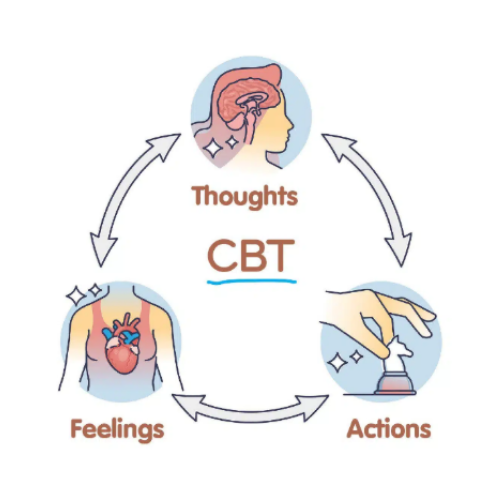
CBT might help to address wider behaviours too – for example, some people feel so embarrassed about their visible eczema that they avoid going out. It can also help people accept the reality of living with eczema and dealing with unpredictable flares.
The process involves working with a trained therapist during a series of sessions, over weeks or months. At the outset, you both agree on what you are trying to achieve and the process is tailored to the person’s individual circumstances. CBT focuses mainly on improving your mental wellbeing in the present, to help you to feel better and create a more positive future.
To help you practise these skills in daily life, so that you can learn to apply them to everyday situations, the therapist assigns ‘homework’. This may involve activities such as journaling, learning to critically evaluate your thoughts and being able to challenge your actions. The therapist works with you to review your homework in the sessions and monitor your progress.
CBT takes time and commitment as well as gradual practice to replace old ways of doing things with new ones. Where it is successful, it can help people to cope better with living with eczema, resulting in long-term benefits and a more positive outlook on life.
How do I access CBT?
CBT is available in several different formats, including face to face, by phone and online.
GP referral If eligible, your GP can refer to local CBT services on the NHS.
IAPT (the Improved Access to Psychological Therapies programme) is a programme providing CBT in England. This does not require a GP referral, although you need to be registered with a GP to access the service.
Dermatology referral Larger dermatology centres in the UK may have psychological services available to patients with chronic skin conditions but at present these are limited. If you have a dermatologist, they may be able to refer you for CBT where this service is available.
Children and young people can access CBT through Children and Adolescent Mental Health Services (CAMHS), through a GP referral, although there may be long waiting lists.
Private therapists You can also access a therapist privately. This involves paying for the sessions. The British Association of Behavioural and Cognitive Psychotherapies (BABCP) has a register of all the accredited therapists in the UK who have met required standards. Visit its website to find one in your area.
For more information about CBT, see our FAQ’s below.
FAQs
Find out more
The Eczema Solution by Sue Armstrong-Brown, is available on Amazon and other bookshops. If you decide to work through the book, consult with your GP or dermatologist.
To find out more about the combined approach and related topics on the Atopic Skin Disease site
Supportive, practical information for adults managing eczema, based on the latest research and regularly reviewed by doctors and nurses.
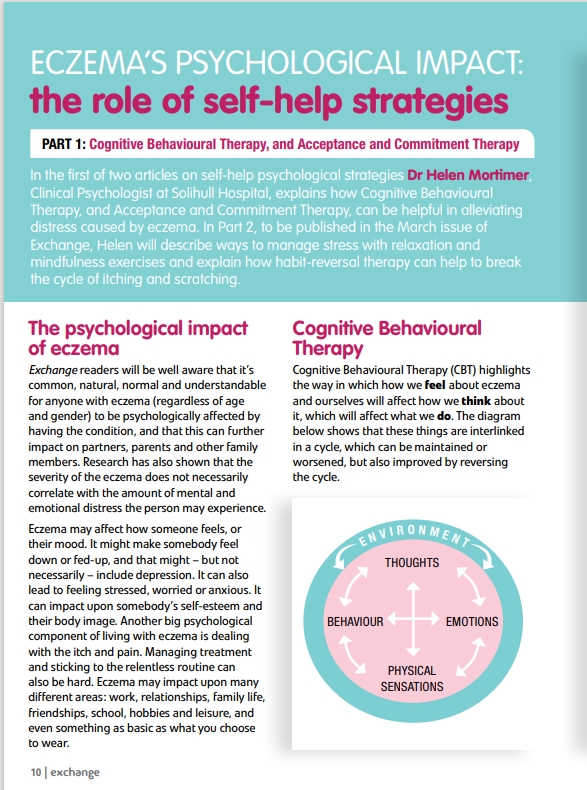
Dr Helen Mortimer, Clinical Psychologist at Solihull Hospital, explains how Cognitive Behavioural Therapy, and Acceptance and Commitment Therapy, can be helpful in alleviating distress caused by eczema
Dr Helen Mortimer, Clinical Psychologist at Solihull Hospital, explains how relaxation and mindfulness exercises can help to relieve stress associated with eczema and how techniques such as habit reversal can help to break the itch–scratch cycle.